Collaboration, Corridors and Canada’s Economic Future
Building Canada’s Energy Corridors Through Collaboration
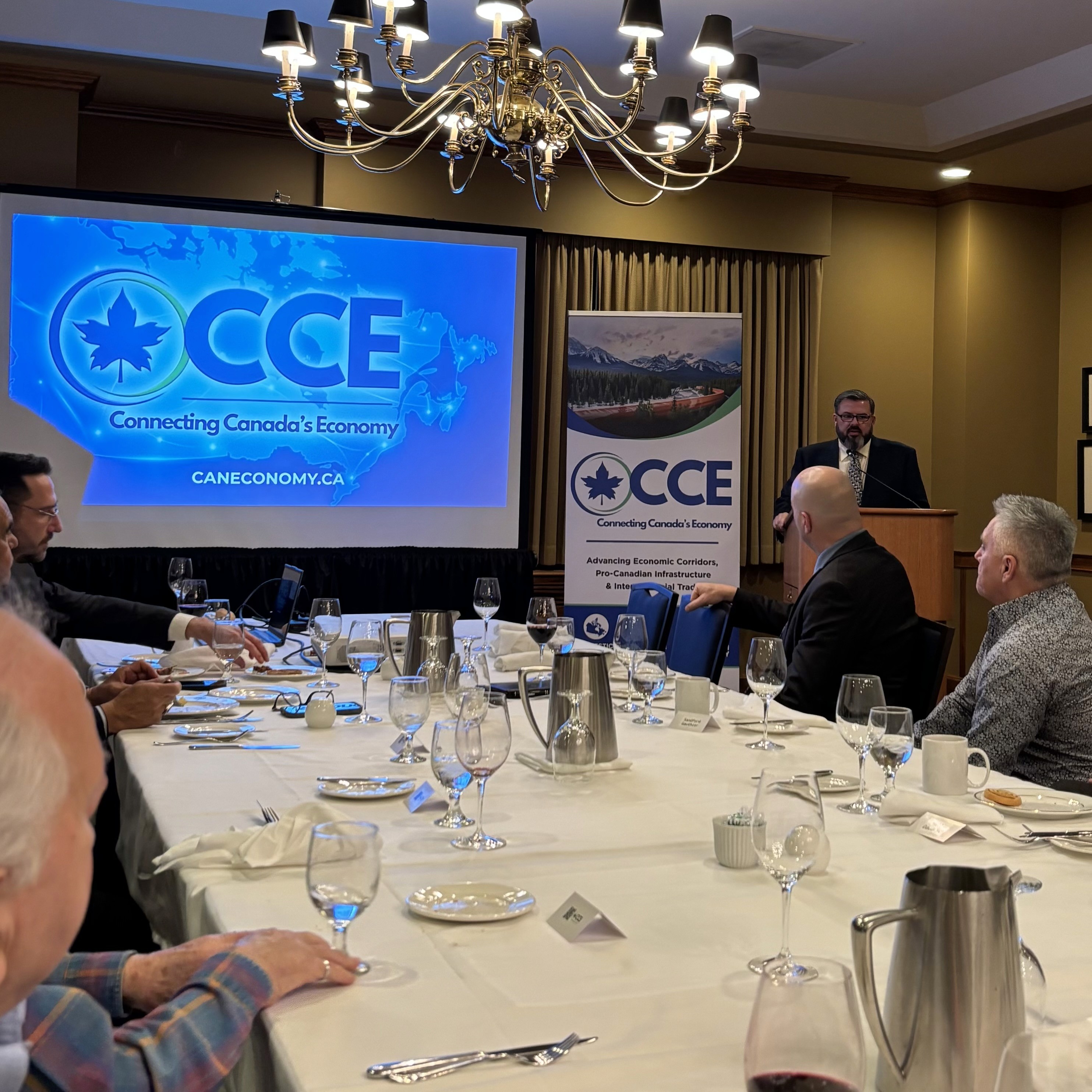
Last week in Calgary, leaders from industry, Indigenous communities, and the energy and infrastructure sectors came together to examine one of the most consequential questions facing Canada’s economy: how Transportation and Utility Corridors (TUCs) can strengthen national competitiveness, support long-term investment, and expand access to global markets.
The roundtable brought together many of Connecting Canada’s Economy’s Corporate Corridor Champions, whose participation reflects a shared commitment to advancing practical, collaborative solutions for Canada’s trade and infrastructure challenges. Their presence helped support constructive dialogue with the Government of Alberta, including engagement with a representative from the Premier’s Office, and underscored the importance of aligning public and private leadership around corridor development.

Modern trade corridors are multi-use by design. They can accommodate oil and natural gas pipelines, electricity transmission, hydrogen infrastructure, carbon capture and storage, telecommunications, rail, roads, and port facilities within a single coordinated right-of-way. Planned together, these systems reduce duplication, improve safety, lower costs, and deliver stronger environmental and economic outcomes.
Canada’s ability to execute infrastructure of this scale is well established. From high-pressure natural gas pipelines to complex port and logistics networks, Canadian engineering and operational expertise ranks among the best in the world. Transportation and Utility Corridors build on this strength and provide a pathway to improved trade efficiency, resilient supply chains, and long-term economic growth.
Indigenous leadership and participation were a central part of the conversation, underscoring the importance of partnership, certainty, and shared opportunity in corridor development. Early alignment around clearly defined routes creates space for meaningful engagement and long-term participation in economic benefits, strengthening outcomes for all involved.
The discussion also benefited from contributions by Kris Kinnear, whose remarks reinforced the importance of disciplined governance, long-range planning, and execution when addressing national infrastructure challenges. His perspective highlighted the difference between conceptual agreement and the sustained work required to deliver results.

A consistent theme emerged throughout the evening: Canada’s prosperity has always depended on its ability to connect regions, move goods efficiently, and bring products to market. Transportation and Utility Corridors are not a single project or policy decision. They are a framework for collaboration that allows diverse interests to align around shared national objectives.
Connecting Canada’s Economy convenes conversations like this to support informed dialogue, evidence-based planning, and cooperation across sectors and regions. The Calgary roundtable reinforced that when industry, governments, Indigenous partners, and investors engage from a shared understanding of scale and purpose, progress becomes possible.

Interested in Becoming a Corporate Corridor Champion?
Corporate Corridor Champions support the work of Connecting Canada’s Economy by advancing collaboration, research and engagement that move Transportation and Utility Corridors from concept to execution.
To learn more about becoming a Corporate Corridor Champion and contributing to this work, please contact Connecting Canada’s Economy to start the conversation.
Mitch Furlong
Executive Director
Connecting Canada’s Economy
Advancing collaboration to strengthen Canada’s trade and infrastructure future
