Why Canada’s Northern Trade Corridor Needs a Second Port
Why Parallel Development at Port Nelson Matters for Debottlenecking Canada’s Northern Trade
Canada’s export capacity is repeatedly constrained not by a lack of demand or resources but by the structure of its transportation systems. Long corridors with few alternatives tend to function well only when conditions are ideal. When weather, labour disruptions, infrastructure failures, or maintenance issues arise, these systems struggle to adapt. The result is delay, congestion, higher costs, and reduced confidence among shippers and buyers. Over time, these constraints cap growth and weaken Canada’s position in global markets.
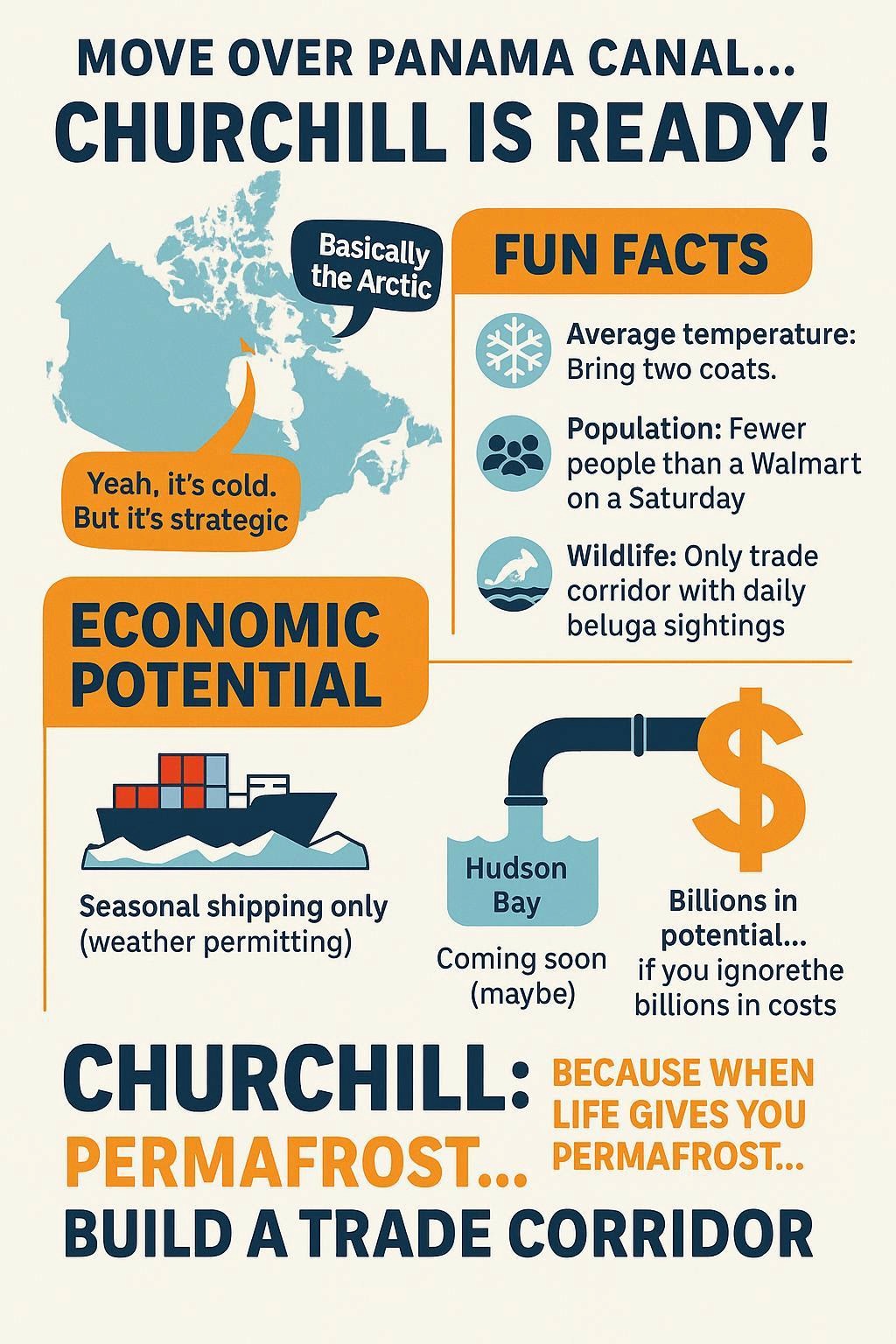
The Hudson Bay corridor provides a clear illustration of this problem. At present, the Port of Churchill serves as the sole marine outlet at the end of a very long and environmentally exposed rail line. When the rail line and port operate smoothly, Churchill offers a geographically efficient route to northern European markets. However, the corridor has little ability to absorb disruption. A problem at the port, a rail outage, flooding, permafrost-related instability, or seasonal delays can halt movement entirely. With no nearby alternative port, ships must wait at high cost or leave the region, while cargo accumulates inland.
Debottlenecking Canada’s Trade
This kind of configuration creates a structural bottleneck. Infrastructure can be expanded at the port itself, but the corridor remains dependent on a single endpoint and a single rail approach. When that endpoint is operating near capacity, any disruption propagates backward through the system. Rail cars have nowhere to unload. Storage fills. Producers and exporters bear the cost, often through delayed shipments, reduced volumes, or price discounts required to compensate buyers for uncertainty.
Debottlenecking, in this context, means addressing the structure of the system rather than focusing solely on individual assets. A corridor designed around one port and one rail line has limited ability to adapt. A corridor with multiple outlets and shared inland staging points has more options when conditions change. This is the logic behind developing Port Nelson in parallel with continued upgrades at Churchill.
Port Nelson – Sharing the Load for a Stronger Corridor
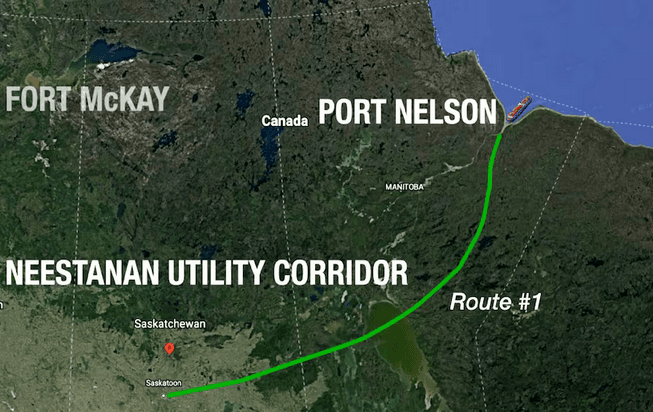
Port Nelson, as proposed through the NeeStaNan Utility Corridor, sits south of Churchill and closer to existing inland transportation networks. Its development would introduce a second marine outlet within the same regional system. That additional outlet changes how risk is distributed across the corridor. Cargo can be staged inland and directed to the port that is operational at a given moment. Ships approaching Hudson Bay have an alternative if conditions deteriorate at one location. Rail disruptions affecting one route do not necessarily shut down the entire system.
Parallel development also reduces pressure on any single asset to perform all functions. Ports differ in their physical characteristics, surrounding land availability, and suitability for different cargo types. Over time, a two-port system allows traffic to be allocated in ways that better match infrastructure to use. This reduces congestion and lowers the likelihood that expansion at one site becomes increasingly expensive while delivering diminishing returns.
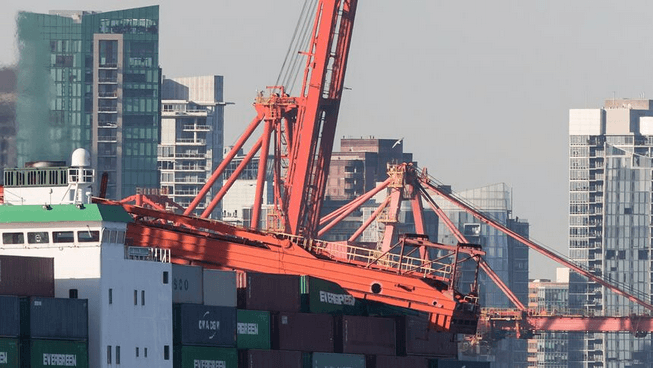
There is a clear parallel elsewhere in Canada. The Port of Vancouver has experienced persistent congestion not because ships cannot arrive or terminals cannot be expanded, but because inland rail capacity has reached its limits. When rail corridors are saturated, additional terminal capacity does not resolve the bottleneck. Instead, congestion shifts upstream. This dynamic has led to delays, backlogs, and increased costs across Western Canada’s supply chains. Hudson Bay faces a similar risk if investment concentrates on a single port at the end of a long rail line without adding redundancy or flexibility to the system.
Public discussion around Hudson Bay infrastructure has raised legitimate concerns. Winter navigation, labour availability, environmental review timelines, and the long-term cost of maintaining infrastructure in a harsh climate are real factors. These concerns underscore the importance of system design. Infrastructure that functions only under ideal conditions does not provide reliable capacity. Systems that can accommodate disruption, reroute flows, and continue operating during partial failures are more valuable to exporters and investors over time.
Churchill + Port Nelson – A Parallel Approach
Developing Port Nelson alongside the upgrade of Churchill does not preclude continued investment in Churchill. It changes the operating context. Instead of asking one port and one rail line to absorb all growth and all risk, a parallel approach distributes that burden. It allows capacity to be added in a way that improves reliability rather than simply increasing throughput targets. It also aligns with how mature trade corridors evolve globally, through multiple nodes connected by shared inland infrastructure and coordinated operations.
The broader implication is straightforward. Export growth depends on corridors that can function under real conditions, not just under optimal assumptions. Debottlenecking requires options, redundancy and the ability to manage disruption without shutting down entire regions. A parallel approach to Hudson Bay access, combining upgrades at Churchill with development at Port Nelson, addresses these requirements directly.
As Canada looks to expand trade, diversify markets, and reduce exposure to single points of failure, the structure of its transportation systems matters as much as the scale of individual projects. Hudson Bay presents an opportunity to apply those lessons deliberately, before constraints harden into permanent limits.